Knock on 和Knock at的区别如下所示。
1. 释义区别:
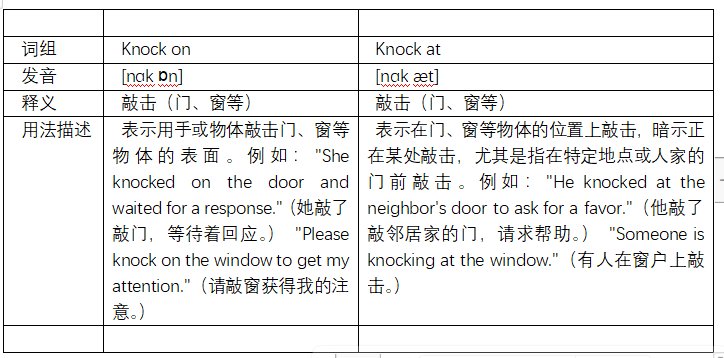
- "Knock on" 意味着敲打或轻敲门、物体等表面。
- "Knock at" 意味着敲门以引起注意或要求进入。
例句:
- I heard a knock on the door.(Knock on)
(我听到了门上的敲打声。)
- He knocked at the door and waited for someone to answer.(Knock at)
(他敲了敲门,等待有人回应。)
2. 用法区别:
- "Knock on" 用来描述在门、物体或表面上进行敲打行为。
- "Knock at" 用来描述在门上进行敲打以引起注意或要求进入的行为。
例句:
- She knocked on the table to get everyone's attention.(Knock on)
(她敲打桌子以引起大家的注意。)
- Please knock at the office door before entering.(Knock at)
(进入之前请敲办公室门。)
3. 使用环境区别:
- "Knock on" 通常用于描述敲打门、窗户、桌子或其他物体的动作。
- "Knock at" 通常用于描述敲打门,特别是当人们要求被允许进入时。
例句:
- He knocked on the window to get her attention.(Knock on)
(他敲打窗户以引起她的注意。)
- They knocked at the neighbor's door to borrow some sugar.(Knock at)
(他们敲了邻居家的门借一些糖。)
4. 形象区别:
- "Knock on" 暗示着一种在门或物体表面上作出敲打的形象。
- "Knock at" 更强调敲门以引起注意或请求进入的动作形象。
例句:
- The carpenter knocked on the wooden door with a hammer.(Knock on)
(木匠用锤子敲打木门。)
- The delivery person knocked at the door to deliver a package.(Knock at)
(送货员敲了敲门送快递。)
5. 影响范围区别:
- "Knock on" 涉及到敲打门、窗户、桌子或其他物体的动作。
- "Knock at" 更专注于敲打门、请求进入或引起对方注意的行为。
例句:
- He accidentally knocked on the glass and it broke.(Knock on)
(他不小心敲打了玻璃,结果打碎了。)
- She knocked at the professor's office door to ask a question.(Knock at)
(她敲了敲教授办公室的门问问题。)